How Much Sleep Do You Actually Need?
Seven hours is the floor, not the goal. What the science says about sleep for adult men, and how to tell if you're getting enough.
MEN Editorial
21 Nov 2026 · 1 min read
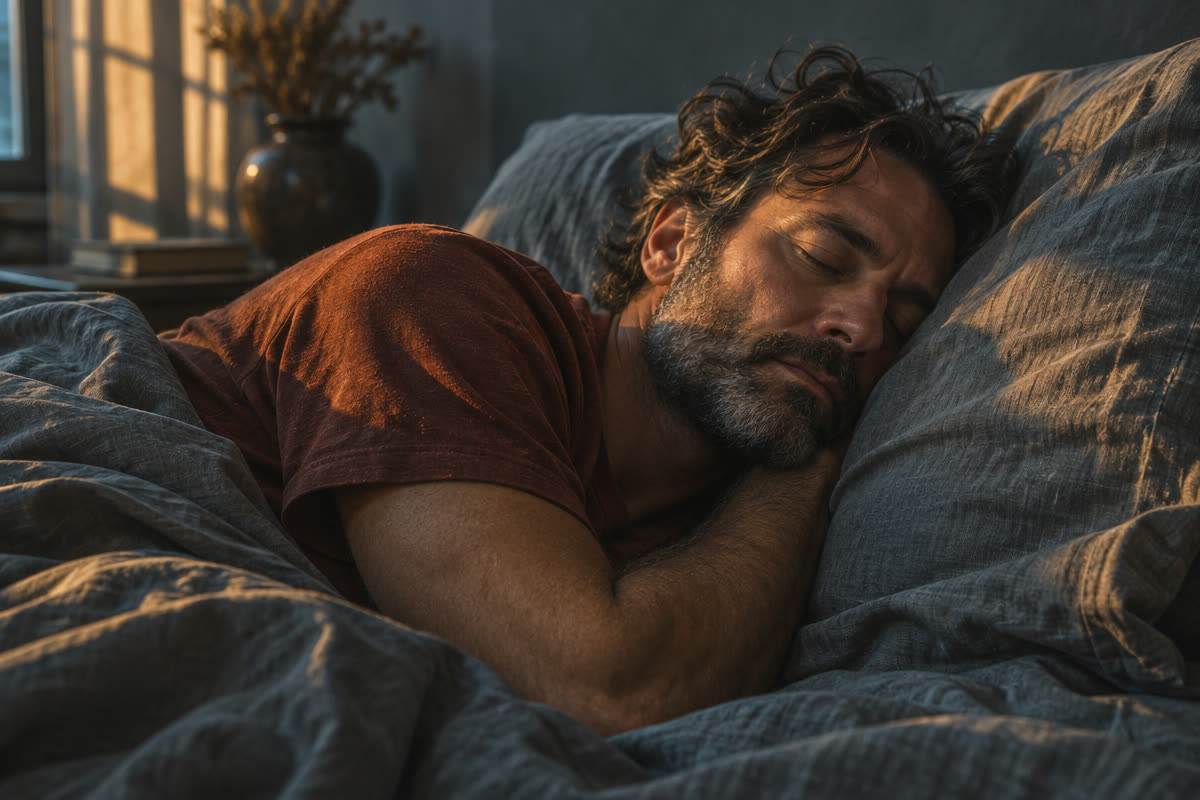
Plenty of men wear short sleep like a badge of honour. The research says it's closer to a slow leak in your health.
The number
Expert panels, including the American Academy of Sleep Medicine and the Sleep Research Society, recommend that adults get at least seven hours a night on a regular basis. Some people need up to nine. Very few people do well on less than six, even if they think they've adapted.
You don't get used to short sleep. You just get used to feeling worse.
What short sleep does
Regularly sleeping less than seven hours is linked with:
- Weight gain and a higher risk of type 2 diabetes
- High blood pressure and heart disease
- Low mood, irritability and anxiety
- Poorer concentration, memory and reaction times
- Lower testosterone
- A weaker immune response
Studies also show that sleep-deprived people consistently underestimate how impaired they are.
Signs you're short
- You need an alarm to wake and hit snooze
- You sleep much longer at weekends
- You feel drowsy in meetings, in front of the TV or while driving
- You rely on caffeine to get through the afternoon
How to get more
- Set a fixed wake time, then count back seven and a half hours for your bedtime
- Protect the last hour before bed: dim lights, no work email
- Keep caffeine to the morning
- Treat sleep like training: it's part of the plan, not what's left over
When to see a doctor
If you're spending enough time in bed but still wake exhausted, snore loudly or stop breathing at night, see your GP. Sleep apnoea and other sleep disorders are common and treatable.
Sources
- Watson NF et al. Recommended amount of sleep for a healthy adult. Sleep, 2015
- NHS: How to get to sleep
- Centers for Disease Control and Prevention: About sleep
Not medical advice. This information is for education only. Talk to your doctor about your own health, symptoms and screening.
Got a story of your own?
Write a post