Why You Should Eat Oily Fish Twice a Week
Salmon, mackerel, sardines and herring are rich in omega-3 fats. What they do for your heart and brain, and how to get more.
MEN Editorial
12 Aug 2026 · 1 min read
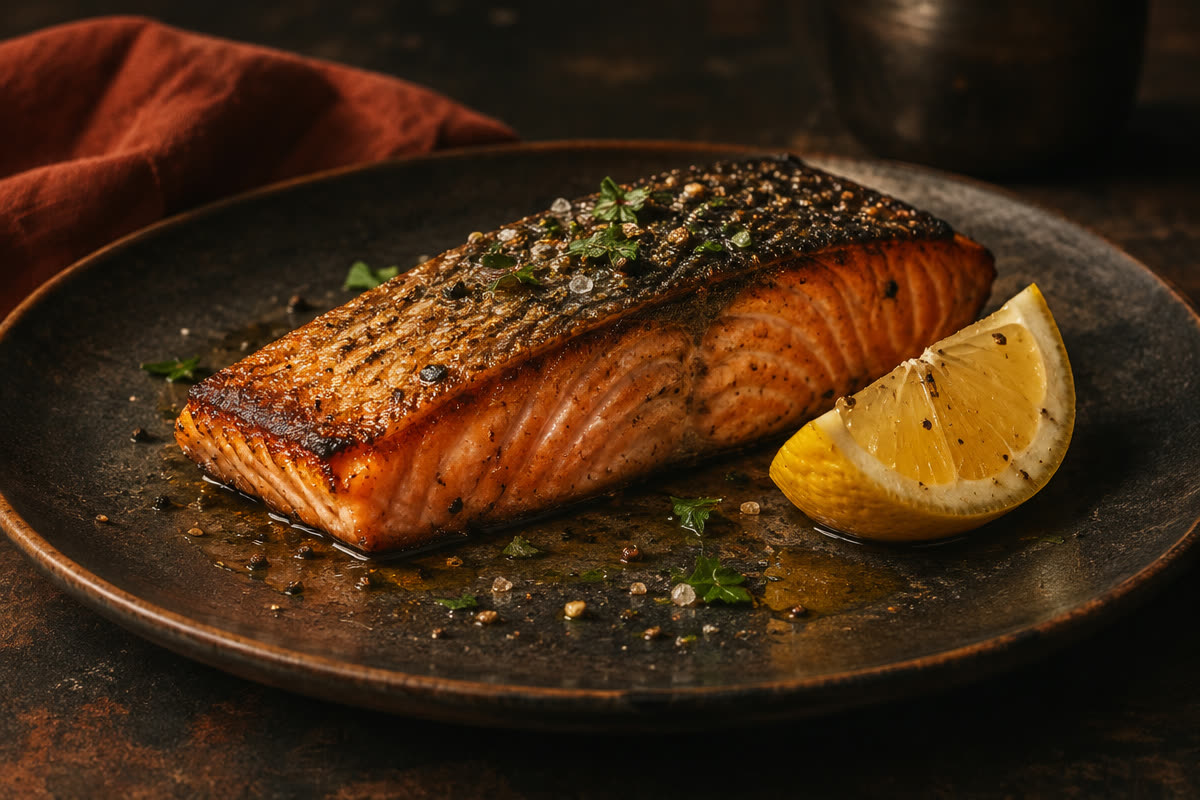
Oily fish is one of the few foods rich in long-chain omega-3 fats, which the body uses to build cells in the heart, brain and eyes. Most Irish men don't eat enough of it.
The guideline
Safefood recommends eating fish twice a week, with at least one portion being oily fish. A portion is about 140g.
Oily fish include
- Salmon
- Mackerel
- Sardines
- Herring
- Trout
- Kippers
- Pilchards
Tuna steaks contain some omega-3, but tinned tuna contains much less.
A tin of mackerel on toast is one of the cheapest healthy meals there is.
What the evidence shows
Observational studies link eating fish with a lower risk of heart disease and stroke. Omega-3 fats help lower triglycerides, a type of blood fat. Supplements have shown less consistent benefits than eating fish, though they may help some groups.
Cheap and easy
- Tinned sardines or mackerel on toast
- Smoked mackerel pâté with oatcakes
- Tinned salmon in a pasta salad
- Baked salmon with veg on a tray
- Kippers for breakfast
Frozen fish is just as nutritious as fresh and often cheaper.
Vegetarian sources
Walnuts, flaxseed and chia seeds contain a different omega-3 called ALA. The body converts only a small amount to the long-chain forms.
Limits
Oily fish can contain low levels of pollutants. Adults can safely eat up to four portions a week. Avoid shark, swordfish and marlin, which can contain mercury.
Sources
- Safefood: Fish
- Food Safety Authority of Ireland: Mercury in fish
- Mozaffarian D, Rimm EB. Fish intake, contaminants, and human health. JAMA, 2006
Not medical advice. This information is for education only. Talk to your doctor about your own health, symptoms and screening.
Got a story of your own?
Write a post