Get the Phone Out of the Bedroom
Late-night scrolling keeps your brain switched on and pushes bedtime later. A simple change that can transform your sleep.
MEN Editorial
5 Sept 2026 · 2 min read
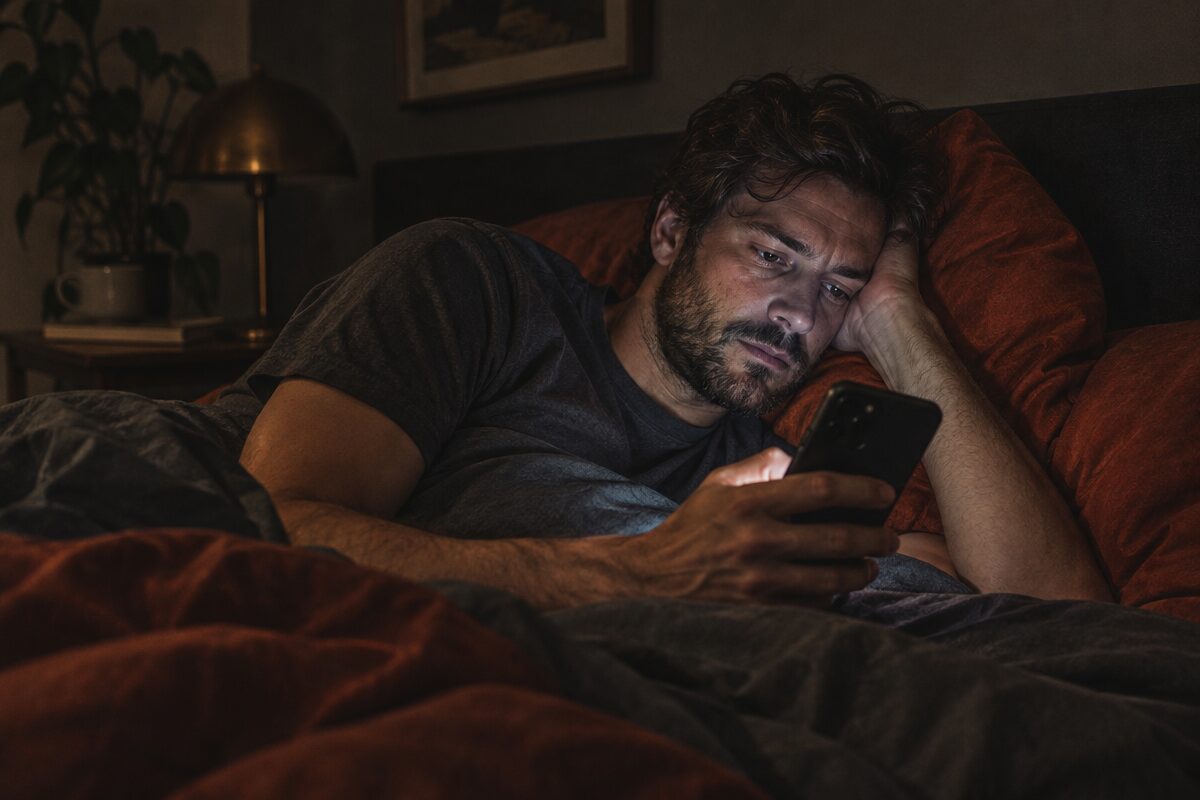
For most of us, the last thing we see at night and the first thing in the morning is a phone. It feels harmless. For sleep, it often isn't.
Why it matters
The blue light from screens gets most of the blame, and bright light in the evening can delay melatonin, the hormone that tells your body it's night. But researchers increasingly think the bigger problem is what's on the screen:
- Emails and news switch on stress
- Social media and videos are designed to keep you scrolling
- Games and messages keep your brain alert
- One more video easily becomes an hour
The result is later bedtimes and less sleep, which researchers call "bedtime procrastination".
The phone isn't the problem. The endless feed is.
What the evidence shows
Studies have linked screen use in bed with shorter sleep, taking longer to fall asleep and more daytime tiredness. Night mode filters may help a little, but they don't fix the habit.
A simple plan
- Charge your phone outside the bedroom
- Buy a cheap alarm clock
- Set a "screens off" time 30 to 60 minutes before bed
- Use the phone's wind-down or focus settings to silence notifications
- Replace scrolling with something calm: reading, stretching, chatting with your partner
If you wake in the night
Don't check the time or your phone. It wakes your brain and starts the "I have to be up in four hours" worry. If you can't sleep after about 20 minutes, get up and do something dull in dim light until you feel sleepy.
Small wins
Most men who move their phone out of the bedroom notice better sleep within a week. It's one of the easiest experiments you can run.
Sources
- Chang AM et al. Evening use of light-emitting eReaders negatively affects sleep. PNAS, 2015
- Exelmans L, Van den Bulck J. Bedtime mobile phone use and sleep in adults. Social Science and Medicine, 2016
- NHS: How to get to sleep
Not medical advice. This information is for education only. Talk to your doctor about your own health, symptoms and screening.
Got a story of your own?
Write a post