Lift Heavy Things After 40
From your 30s, you start losing muscle. Strength training is the most powerful way to slow it, and it's never too late to start.
MEN Editorial
19 Nov 2026 · 2 min read
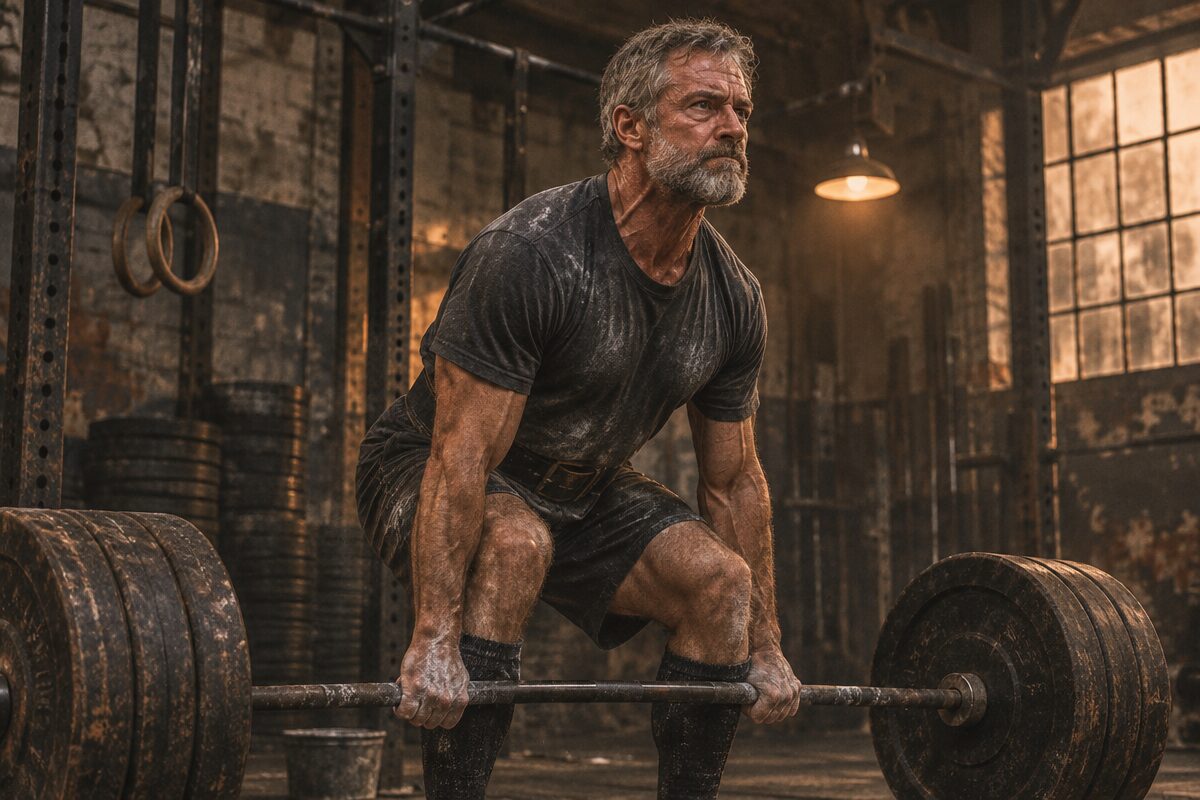
After about 30, men gradually lose muscle mass and strength, and the loss speeds up after 60. This age-related decline, called sarcopenia, is linked with falls, frailty and losing independence. The good news is that muscle responds to training at any age.
Why strength matters
Muscle-strengthening exercise is linked with:
- Lower risk of death from all causes
- Better blood sugar control and lower diabetes risk
- Stronger bones
- Less back and joint pain
- Better mood and sleep
- Staying independent for longer
A large review found that 30 to 60 minutes a week of muscle-strengthening activity was linked with a 10 to 20% lower risk of death from all causes.
You don't need to become a bodybuilder. You need to stay strong enough to live your life.
What the guidelines say
The WHO and the HSE recommend muscle-strengthening activities that work all the major muscle groups on at least two days a week, alongside aerobic activity.
Getting started
- Pick five or six basic movements: squat, hinge such as a deadlift, push such as a press-up, pull such as a row, and carry
- Start with bodyweight or light weights and learn good form
- Do two to three sets of 8 to 12 repetitions
- Increase the weight gradually when it starts to feel easy
- Rest a day between sessions for the same muscles
Safety
- Warm up first
- Stop if you feel sharp pain
- Consider a few sessions with a qualified coach
- If you have heart disease, high blood pressure or other conditions, check with your GP first
Don't forget protein
Muscle needs protein to grow, and older men may need more. Spread protein across your meals, especially after training.
Sources
- World Health Organization: Guidelines on physical activity and sedentary behaviour, 2020
- Momma H et al. Muscle-strengthening activities are associated with lower risk and mortality in major non-communicable diseases. British Journal of Sports Medicine, 2022
- HSE: Physical activity guidelines for adults
Not medical advice. This information is for education only. Talk to your doctor about your own health, symptoms and screening.
Got a story of your own?
Write a post