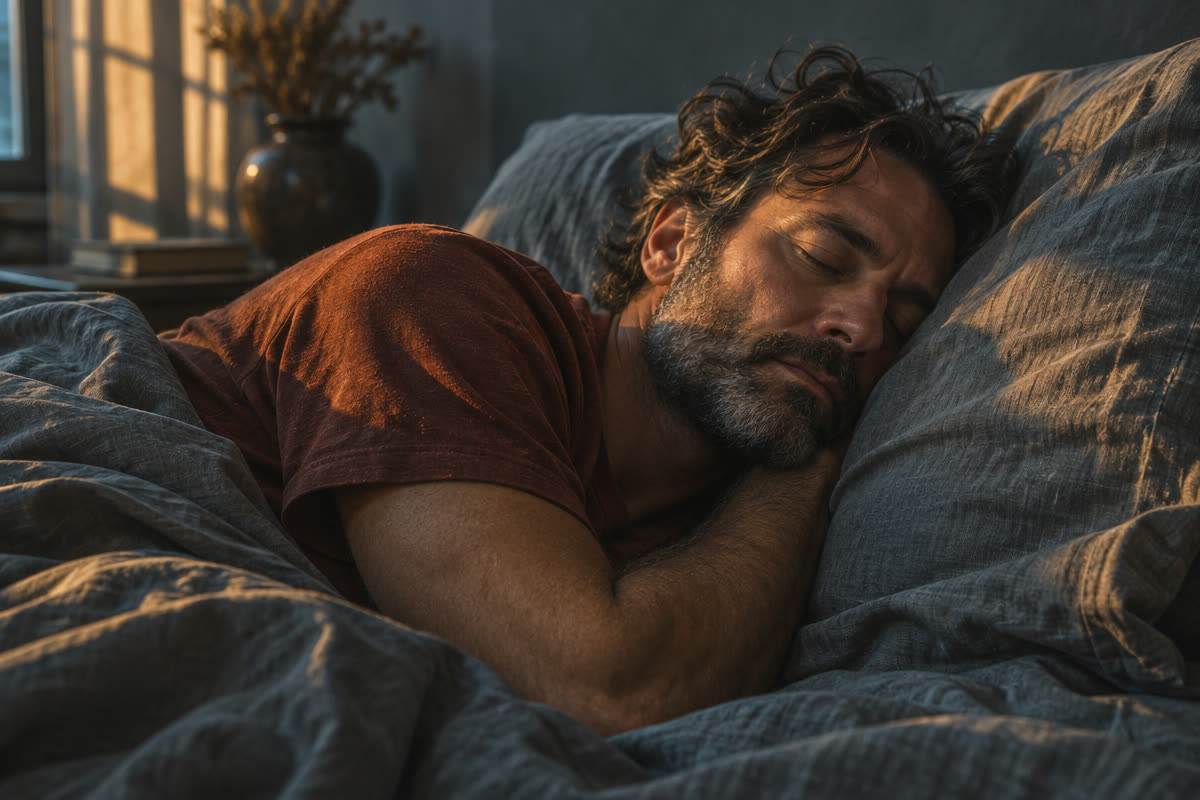
Sleep
The most underrated performance drug
Adults need at least seven hours of sleep a night, yet roughly a third regularly get less. Short sleep is linked with obesity, type 2 diabetes, high blood pressure, heart disease, depression and lower testosterone.
Men are also more likely than women to have obstructive sleep apnoea, where the airway repeatedly closes during sleep. Loud snoring, gasping and daytime sleepiness are warning signs worth taking seriously.
1 in 3
US adults don't get the recommended 7+ hours of sleep (CDC)
01Warning signs
- Taking more than 30 minutes to fall asleep most nights
- Waking often or too early and being unable to get back to sleep
- Loud snoring, choking or gasping (your partner may notice first)
- Daytime sleepiness, nodding off while reading, watching TV or driving
- Morning headaches, poor concentration and low mood
02Try this
01
Anchor your wake time
Wake up at the same time every day, weekends included. It sets your body clock more than anything else.
02
Get morning light
10 to 15 minutes of daylight soon after waking helps you feel sleepy at the right time at night.
03
Cut caffeine after midday
Caffeine stays in your system for hours and reduces deep sleep, even if you can still fall asleep.
04
Keep the bedroom cool and dark
Around 18°C (65°F), blackout curtains and no screens in bed.
05
Limit late alcohol
A nightcap helps you fall asleep but fragments sleep in the second half of the night.
06
Don't lie there fighting it
If you're awake for more than 20 minutes, get up, do something calm in dim light, and go back when sleepy. CBT for insomnia (CBT-I) is the first-line treatment.
See a doctor if
- You snore loudly and feel sleepy during the day (possible sleep apnoea)
- Insomnia has lasted more than three months
- You've fallen asleep while driving