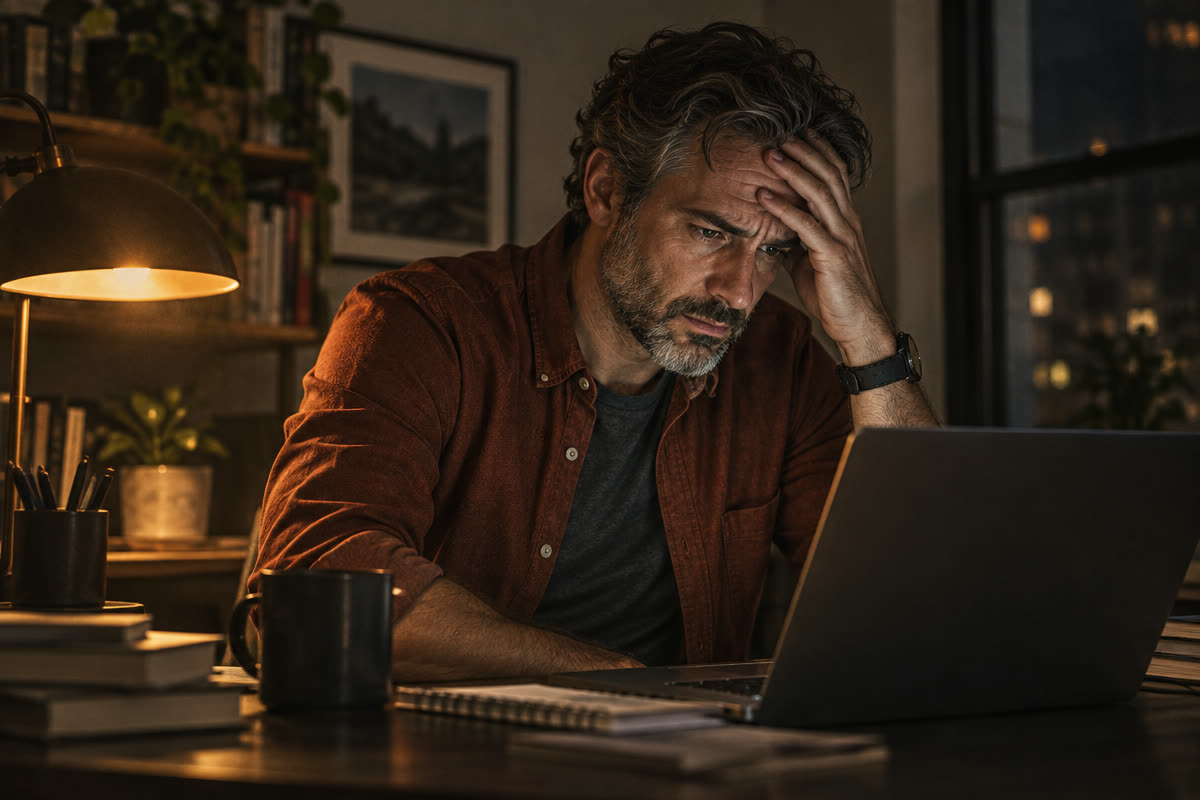
Stress
When the pressure doesn't switch off
Stress is your body's alarm system. A deadline, an argument or a near miss in traffic triggers a surge of adrenaline and cortisol: your heart beats faster, your muscles tense and your focus sharpens. In short bursts, that's useful.
The problem is when the alarm never switches off. Long-term stress keeps your body on high alert, which is linked to raised blood pressure, heart disease, poor sleep, weight gain around the middle, low sex drive and a weaker immune system. Many men don't call it stress. They call it being busy, tired or short-tempered.
76%
of US adults reported at least one health effect from stress in the past month (APA, 2023)
01Warning signs
- Irritability, a short fuse or snapping at people you care about
- Trouble falling or staying asleep, waking up already tired
- Tight shoulders, jaw clenching, headaches or stomach problems
- Drinking, eating or scrolling more to switch off
- Racing thoughts, trouble concentrating, forgetting things
- Low interest in sex
02Try this
01
Breathe slower than you think
Breathe in for 4 seconds and out for 6, for 2 to 5 minutes. A longer out-breath activates the body's calming system and lowers your heart rate.
02
Move every day
A brisk 20 to 30 minute walk burns off stress hormones. Exercise is one of the most reliable stress reducers there is.
03
Write down the load
List what is on your mind, then split it into what you can control and what you can't. Act on one thing you can control today.
04
Protect your sleep
Same bedtime, a cool dark room, no screens for the last 30 minutes. Stress and poor sleep feed each other.
05
Talk to someone
A partner, a mate, a doctor or a counsellor. Saying it out loud takes the weight off. It's not weakness, it's maintenance.
06
Watch the alcohol
Drinking helps you switch off tonight but worsens anxiety and sleep tomorrow.
See a doctor if
- Stress is affecting your work, relationships or sleep for more than a few weeks
- You have chest pain, palpitations or very high blood pressure
- You're relying on alcohol or drugs to cope
- You feel hopeless or have thoughts of harming yourself. Get help now (see the support lines at the bottom of this page)